In July of last year, the Food and Drug Administration sent Ultragenyx a letter that read like a compliment folded around a refusal. The neurodevelopmental data on the company’s Sanfilippo gene therapy were robust, the agency said. The biomarker data were supportive. Then it declined to approve the drug.
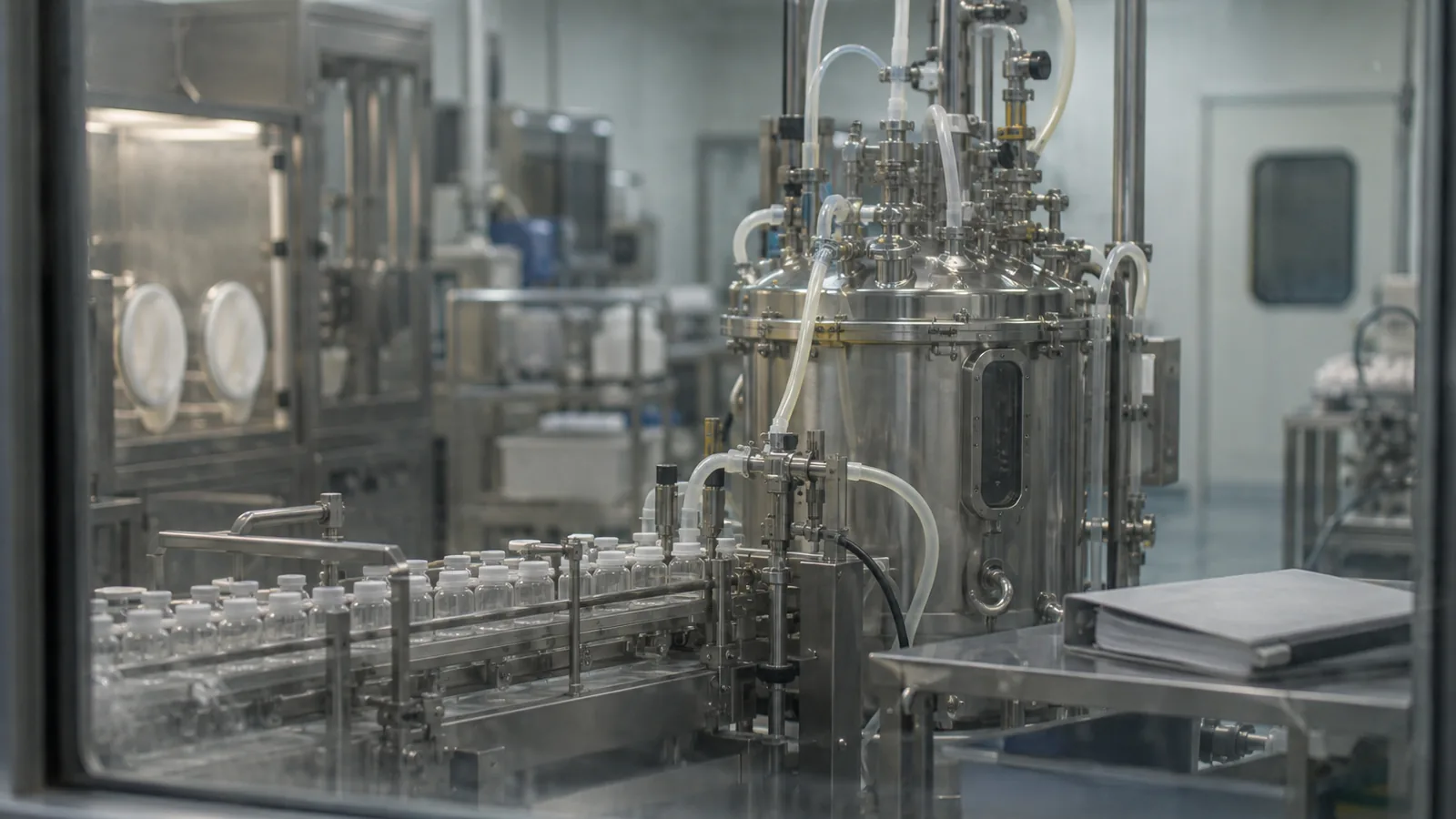
The FDA was not objecting to whether the therapy worked. Its problem, laid out in the Complete Response Letter, was chemistry, manufacturing, and controls, along with a set of observations from a manufacturing-facility inspection: the process records that govern how a biologic is made, not the clinical case for the drug itself. Ultragenyx said as much at the time, calling the observations readily addressable, tied to facilities and processes, and not directly related to the quality of the product. For a disease that kills children on a fixed clock, that distinction stopped being a technicality the moment the letter went out.
Sanfilippo syndrome type A is what happens when a single enzyme goes missing. A child inherits two broken copies of the SGSH gene, cannot produce sulfamidase, and cannot clear a sugar called heparan sulfate out of the brain, so it accumulates. These children learn to walk and to talk close to the normal schedule, and then, somewhere in the toddler years, they begin to lose all of it in reverse: language, sleep, motor control, the ability to recognize their own parents. Median life expectancy is 15 years. There are 3,000 to 5,000 of these children across the countries where the drug will be sold, and until this week not one of them had an approved treatment for the underlying disease.
On September 17, the FDA approved that treatment. Fayuvi, generic name rebisufligene etisparvovec-hopf, is a one-time intravenous infusion built on an AAV9 viral vector that carries a working copy of SGSH into cells and lets the body make the enzyme the child was born without. The evidence behind it is not a press-release relative number pinned to a handful of patients. It is a clinical endpoint, the harder kind. In the TRANSPHER A study, 17 treated children were measured against 27 untreated children from a natural-history cohort, and on the Bayley-III cognitive scale the treated group scored 23.5 points higher, with a p-value under 0.0001. The toxic heparan sulfate dropped and stayed suppressed across nearly eight years of follow-up. This is a full, standard approval on cognition, not an accelerated nod on a surrogate the company can sort out later. On the merits, it earned the label.
Which is why the timeline deserves a closer read. Ultragenyx first brought the drug to the FDA in early 2025. By the agency’s own account, its reviewers had no quarrel with the clinical case that summer, and the letter that turned the company away said so in writing. Ultragenyx resubmitted in January, the FDA accepted the file, and the decision landed this month. The clinical reviewers had signed off. The factory inspectors had not.
Count the interval against the disease and it stops being an administrative footnote. Sanfilippo A is a neurodegenerative condition whose one opening, the reason the therapy works at all, is reaching a child before the brain is gone. The label is written for patients as young as two. Every month spent reconciling manufacturing records is a month in which a two-year-old becomes a three-year-old and a treatable window narrows toward a closed one. Nobody at the agency wrote down a body count, because that is not how a Complete Response Letter is scored. But the children were aging while the documents circulated, and the documents were never the part anyone disputed.
The company that came through all this did not walk away empty-handed, and the ledger tells the rest. Along with the approval, Ultragenyx received a rare pediatric disease priority review voucher, a transferable coupon it can use or sell to send some future application to the front of the FDA’s queue. These vouchers have sold for around a hundred million dollars. What the company has not said is what Fayuvi itself will cost. The release announcing the milestone runs to executive quotes about historic hope and a shipping window of 30 to 60 days, and it carries no price. They announced the medal. The invoice comes later.
The hazards, for their part, are real, and the label does not hide them. It warns of thrombotic microangiopathy, a dangerous clotting reaction seen with AAV gene therapies, and it warns that malignancy may follow treatment because the vector’s DNA can integrate into the child’s genome and, in theory, seed a tumor years later. Parents staring at a 15-year horizon will take that trade, and most will take it without a second thought. Those risks are not the scandal here. The year the children spent waiting on paperwork is.
The people who finally got this drug across the line were not the regulators. The Cure Sanfilippo Foundation, founded by parents of children with the disease, called the approval the culmination of decades of advocacy. It is a generous way to describe a system that had the science in hand last summer and then spent the year that followed on manufacturing records that, by the company’s own account, had nothing to do with the drug.
Sources
- FDA – Approves First Gene Therapy for Pediatric Patients with Sanfilippo Syndrome Type A (Sept 17, 2026)
- Ultragenyx – Announces Approval of FAYUVI Gene Therapy, First-Ever FDA-Approved Treatment for Sanfilippo Syndrome Type A (Sept 17, 2026)
- Ultragenyx – Receives Complete Response Letter from FDA for UX111 (July 11, 2025)
- Cure Sanfilippo Foundation – Ultragenyx resubmits UX111 to FDA for accelerated approval (Jan 2026)
- Ultragenyx – FDA Acceptance of BLA Resubmission for UX111