For about thirty years, the working story about smell was that it was the messy sense. Vision has tidy retinotopic strips in the visual cortex. Hearing has frequency ladders you can label. Touch gets a homunculus you can point to. Smell got a shrug and a story that the receptors sat in vague zones of the nasal lining with a random assortment inside each zone, and the brain somehow sorted it out downstream. I taught a version of that to a college roommate once, with way too much confidence. The textbook was not exactly wrong, but the part it shrugged at turns out to carry real clinical weight, and that matters for a lot more people than the field has been willing to admit. Roughly two thirds of the people COVID infected in 2020 lost their sense of smell for a stretch, and many of them have spent five years being told there is not much to do. That casual shrug is the thing this new mouse work is quietly setting up to demolish.
A pair of papers published in Cell on April 28 from two Harvard labs, Sandeep Datta with David Brann doing the developmental side and Catherine Dulac with Xiaowei Zhuang and Bogdan Bintu doing the imaging and social-odor side, mapped roughly 1,100 odorant receptors across a mouse nose at once. Bintu, talking about the work, put it bluntly. “That level of stereotypy tells you this wiring diagram is genetically programmed.” Inside each broad nasal zone, the receptors are not randomly scattered after all. They sit in tight horizontal stripes running from the top of the nasal cavity to the bottom, each receptor type holding a precise vertical position, with neurons carrying the same receptor living in the same stripe. The chaos people had been describing was an organization too fine to see one receptor at a time.
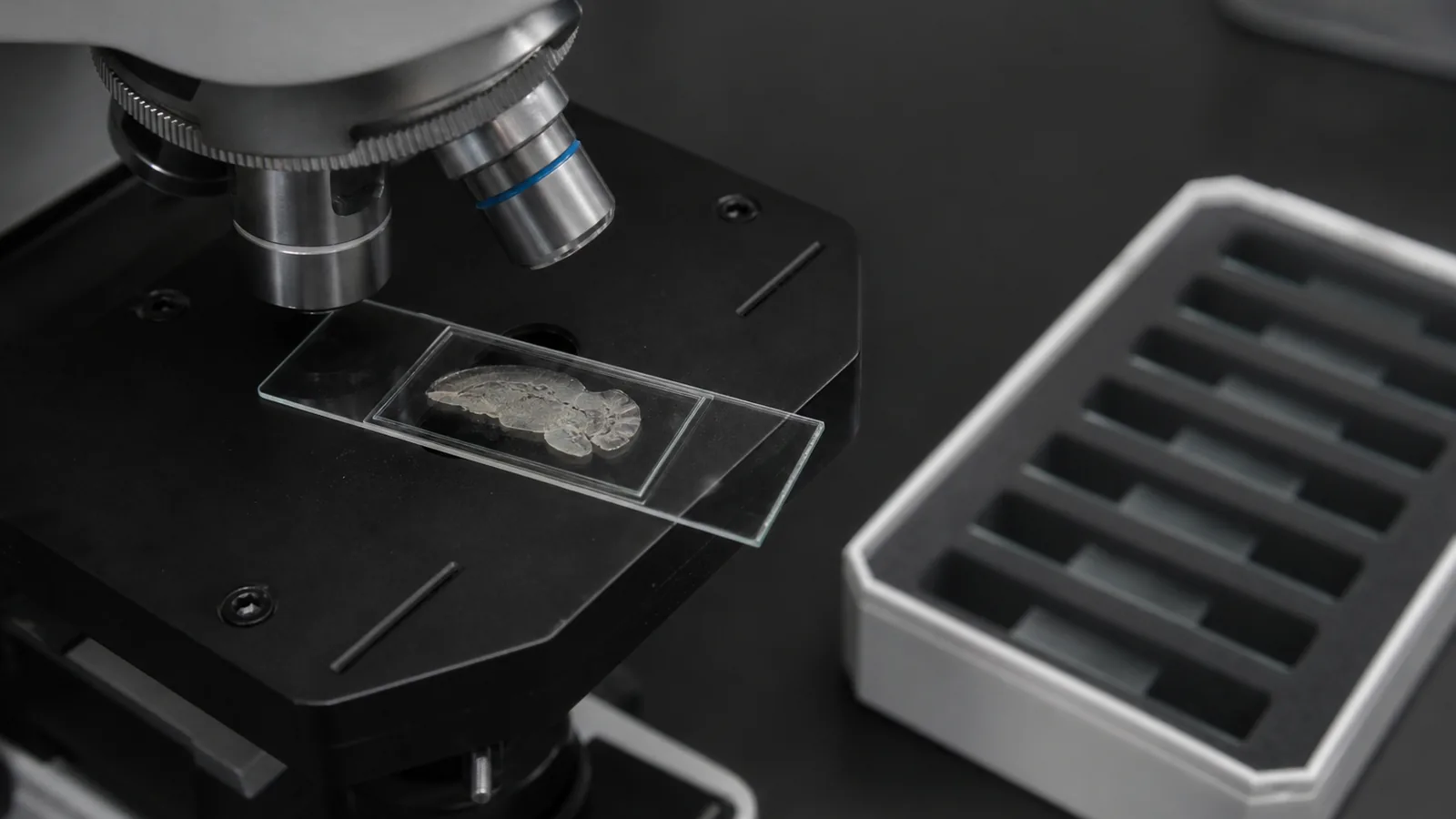
The technique that cracked it is MERFISH, multiplexed error-robust fluorescent in situ hybridization. In plain English, it lets you read out which gene is switched on in every individual cell across a slice of tissue, all at once, instead of one receptor at a time. Smell looked random for decades for the same reason a dark room looks empty when you only have a single match. You weren’t seeing enough at once. With the lights up, the stripes appear, and they line up with a parallel map in the olfactory bulb, the first brain station for smell. The nose pattern projects to the brain pattern with the precision of a wiring diagram, not the fuzz of a statistical average. The developmental paper traced this back into how the mouse nose is built and pinned it on retinoic acid, a vitamin A derivative whose gradient across the embryonic epithelium tells each baby neuron which receptor to switch on based on where it sits. Geography is destiny in the mouse nose, and that geography gets set long before the animal ever smells the world.
Here is the part I went back and reread twice. The Dulac and Zhuang paper asked which receptors actually fire for the odors a mouse cares about: scents from other males, from females, from pups, from predators including cat bedding. None of those scattered either. Each category lights up its own constrained patch of the map. Sensing another male, sensing a pup, and sensing a predator are, anatomically, three different patches of nose handing off to three different patches of brain. Olfaction is still combinatorial, the way a chord is still made of notes, but the categories that matter most for survival come with a built-in spatial address. That is not how anyone draws this in introductory neuroscience.
Why should anyone who is not a textbook publisher care? Because smell loss is not a quirky inconvenience, and the medical system has been pretending it is. Olfactory dysfunction shows up in about 90 percent of early Parkinson’s patients and routinely predates the motor symptoms by four years or more. In early Alzheimer’s the figure is around 85 percent, climbing as the disease progresses. Frontotemporal dementia case series have clocked it as high as 96 percent. Olfactory dysfunction can be among the earliest warning signs the nervous system gives that something is going wrong, and the standard clinical tool for checking it is still a scratch-and-sniff card from the 1980s, because the underlying biology was a black box.
Then there is the much larger population that suddenly cared about their nose in 2020. Early-pandemic cohorts put smell loss at roughly 67 percent of people infected with the original variants, and a slice of them never fully got it back. The default clinical message a lot of those patients heard, and many still hear, is some version of we don’t really know what to do.
That message is half true and half a problem. The half that is true: the standard pharmaceutical reach, corticosteroids, mostly intranasal sprays studied in post-COVID smell loss, has essentially no signal in meta-analysis. Steroids do not fix this. The half that is a problem: “steroids don’t work” keeps getting translated, in clinic and online, into “nothing works,” and that translation is wrong.
What does have evidence is the unglamorous stuff that gets filed under alternative and waved off. Olfactory training, the practice of deliberately smelling a fixed set of strong scents like rose, eucalyptus, clove, and lemon for twenty seconds each, twice a day, for weeks to months, has been recommended in clinical reviews and position papers for post-viral smell loss because the trials keep showing benefit over no training. Platelet-rich plasma injected into the olfactory cleft has a small but growing randomized literature in post-COVID anosmia with positive signals. None of this is a cure. All of it is more than the establishment shrug suggests, and the gap between “we have no FDA-approved drug for this” and “there is nothing for you to do” is exactly the gap captured medicine likes to leave patients sitting in.
The Harvard work does not close that gap by itself, and it would be dishonest to pretend it does. This is mouse tissue. Human nasal anatomy is similar in outline but not identical in geometry, and a wiring atlas in a model organism is a long way from a clinic appointment. Datta is direct about the distance. “We cannot fix smell without understanding how it works on a basic level.” What the paper changes is the size of the problem you are allowed to imagine solving. If the mouse olfactory system has a clean topographic structure and the human one turns out to be organized along similar principles, then the diagnostic ambition opens up, because you could in principle ask whether specific receptor regions degenerate first in early Parkinson’s instead of waiting for the tremor. The regenerative ambition opens up too, because stem-cell and gene-therapy work on the olfactory epithelium now has a target architecture to aim at instead of fog. Both of those are contingent on mapping the human nose and then matching it to specific diseases. Neither is hand-waving.
I came into this story expecting another scientists-discover-something-cool-but-vague piece. What I found is a piece of basic science that quietly moves smell into the same category as vision and hearing, a sensory system with structure, and a window onto the brain that deserves serious attention when it stops working. If you know someone whose smell never came back after COVID, or never came back right, take it seriously, and push their doctor to. Ask about olfactory training. Ask whether there is an academic ENT in reach who is doing PRP for olfactory cleft. Do not accept the shrug. The nose has been talking the whole time, in stripes. The field just learned to read.
Sources
- Cell – A spatial code governs olfactory receptor choice and aligns sensory maps in the nose and brain (2026)
- Cell – Spatial organization and detection of social odors in mouse primary olfactory system (2026)
- Harvard MCB – Mapping the Sense of Smell, Molecule by Molecule
- NIH Research Matters – Scientists create detailed map of odor receptors
- PMC – Olfactory dysfunction in aging and neurodegenerative diseases (2021)
- PMC – Loss of Olfactory Function – Early Indicator for Covid-19, Other Viral Infections and Neurodegenerative Disorders (2020)
- PMC – The Effect of Corticosteroids on Post-Covid-19 Smell Loss: A Meta-Analysis