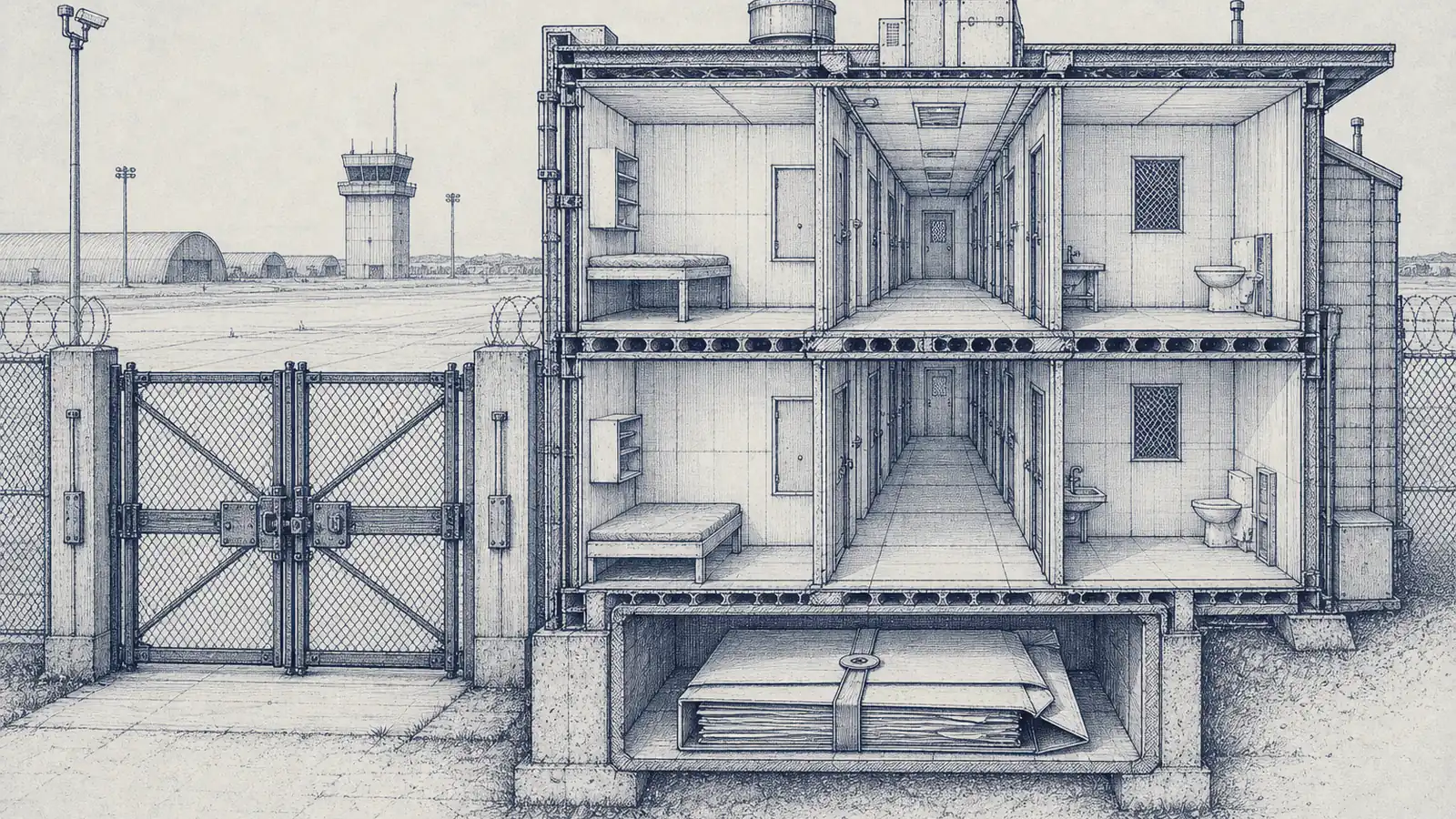
On May 28, a Wednesday afternoon press conference in Canberra, Australian Health Minister Mark Butler announced an eighteen-day extension to a biosecurity detention order that had been due to expire June 5. The six people held under that order, five Australian residents and one New Zealander, had just tested negative again. The compound holding them has sat largely empty since 2022. They will now stay until June 23.
The compound is the Centre for National Resilience at Bullsbrook, next to RAAF Base Pearce outside Perth. It was stood up for COVID-era quarantine and, in the words of the public broadcaster that covered the airlift in, has “remained largely unused” since. It is back in service to hold six passengers repatriated from the MV Hondius, the Antarctic-itinerary cruise ship at the centre of the Andes hantavirus cluster the World Health Organization has been tracking since early May.
The order is a human biosecurity control order under the Biosecurity Act 2015, the statute that produced Australia’s COVID-era facility quarantines. It lets the Health Minister or a delegated officer compel a person to remain at a specified place for a specified period when listed criteria are met. Butler cited advice from the Australian Health Protection Committee and WHO guidance. “All six have again tested negative,” he told reporters, before adding that the passengers had been “informed about the advice and the decision of government.”
The government framing flattened a tiered set of guidance into one number. WHO says 42 days. The Centre for National Resilience can deliver 42 days. The order runs 42 days. The Australian press, to the extent it covered the extension at all, repeated the same number.
WHO’s actual guidance is layered. Read the Disease Outbreak News dated May 22. Contacts are sorted into two tiers. For the high-risk tier, the text reads: “active monitoring and home or facility quarantine for 42 days following their last exposure.” For the low-risk tier: “Current evidence does not support routine laboratory testing or quarantine of low-risk contacts; instead, they should undertake passive self-monitoring and seek medical evaluation if symptoms develop.” The 42-day figure is a statistical endpoint on an incubation curve, not a confinement directive. WHO gives the math openly: mean incubation of about 22 days, 91 percent probability of safe release at 35 days, 96 percent at 42.
That layered structure is what the Australian announcement collapsed. Home quarantine was on the menu for the high-risk tier. Facility detention was on the menu. WHO offered both. Australia chose the harder option, in a facility designed for hundreds and currently holding six.
The contact numbers cut against any read of WHO as endorsing universal facility confinement. The May 22 update logged more than 600 contacts across 32 countries, territories, and areas, split 53 percent high-risk and 47 percent low-risk. The low-risk slice, roughly 280 people, falls under explicit WHO guidance against routine quarantine. The high-risk slice gets a regimen that may be carried out at home. Nothing in the document mandates a fenced compound.
The U.S. response shows what the differentiated read looked like in practice. CDC requested that 18 U.S. passengers repatriated from the Hondius remain at the Nebraska Quarantine Facility through May 31, the 21-day mark from last exposure, and issued formal quarantine orders against two of them. Twenty-one days, not forty-two. After that the passengers were released, with monitoring continuing in their home jurisdictions. Facility detention was the opening move, not the six-week sentence. PBS reported that passengers returning to the United States and most of Europe were expected to “spend a few days in a quarantine center before they were sent home.”
The most recent test results sit in tension with the Australian read of the guidance, though they do not by themselves defeat it. WHO is explicit that 42 days is the statistical endpoint after which infection becomes improbable, not a deadline that earlier negative results override. The negatives do not prove the six are clear. What they do is leave the question hanging: the same statistical model that justifies a 42-day endpoint allowed the United States to release people at 21 days and recommended home quarantine as an option from the start of the high-risk tier. The Australian government did not pick that option. It has not published the individualized exposure assessment that would explain why every one of the six landed in the highest-risk facility tier and stayed there past the original expiry.
What the official Australian record establishes: the extension was made on AHPC advice, it tracks the upper bound of WHO’s high-risk window, it uses an existing facility. What the official Australian record does not establish: the per-detainee exposure history, the per-detainee risk assessment, the legal reasoning for foreclosing the home-quarantine option WHO explicitly permits, or the operating cost of running Bullsbrook for the additional eighteen days. Butler’s press conference did not surface those documents. They have not surfaced elsewhere.
The Brownstone Institute, which ran the case under the headline “Jailed for Hantavirus Exposure” on June 2, framed the silence as part of the story. The Australian author, Richard Kelly, observed that domestic coverage of the extension was thin to absent. His piece is opinionated and emphatic, and it makes a case the official documents do not refute: the strictest available option, applied without published reasoning, in a country whose press has not pressed for any.
The COVID-era public-health apparatus argued, repeatedly, that emergency-statute powers would be returned to the box once the emergency receded. The Biosecurity Act 2015’s facility-detention provisions sit in that category. The records of the past month show what happens when the box is left open. An order extended quietly two weeks before its scheduled expiry, on a Wednesday afternoon, in a country whose press largely did not follow up. It is the same legal architecture and the same compound that ran the COVID-era detentions, signed off by a Minister who has not had to explain himself on any timetable the public can compel.
Six people. Forty-two days. The records establish what Australia chose. They do not establish why the home-quarantine option WHO offered was foreclosed, why the most stringent tier was applied uniformly across all six, or what the facility costs to run. The Minister has the documents. The detainees have time. The public has the press release.
Sources
- WHO – Disease Outbreak News: Andes Hantavirus, MV Hondius cluster, May 28 2026
- CDC Health Alert Network – 2026 Multi-country Hantavirus Cluster Linked to Cruise Ship (HAN00528)
- PBS NewsHour – 6 passengers from hantavirus-hit cruise ship arrive in Australia for 3-week quarantine
- SBS News – Australians from hantavirus-hit cruise issued extended quarantine orders
- U.S. News – Australia Extends Quarantine for Hantavirus-Hit Cruise Ship Passengers (2026)
- Brownstone Institute – Jailed for Hantavirus Exposure (2026)