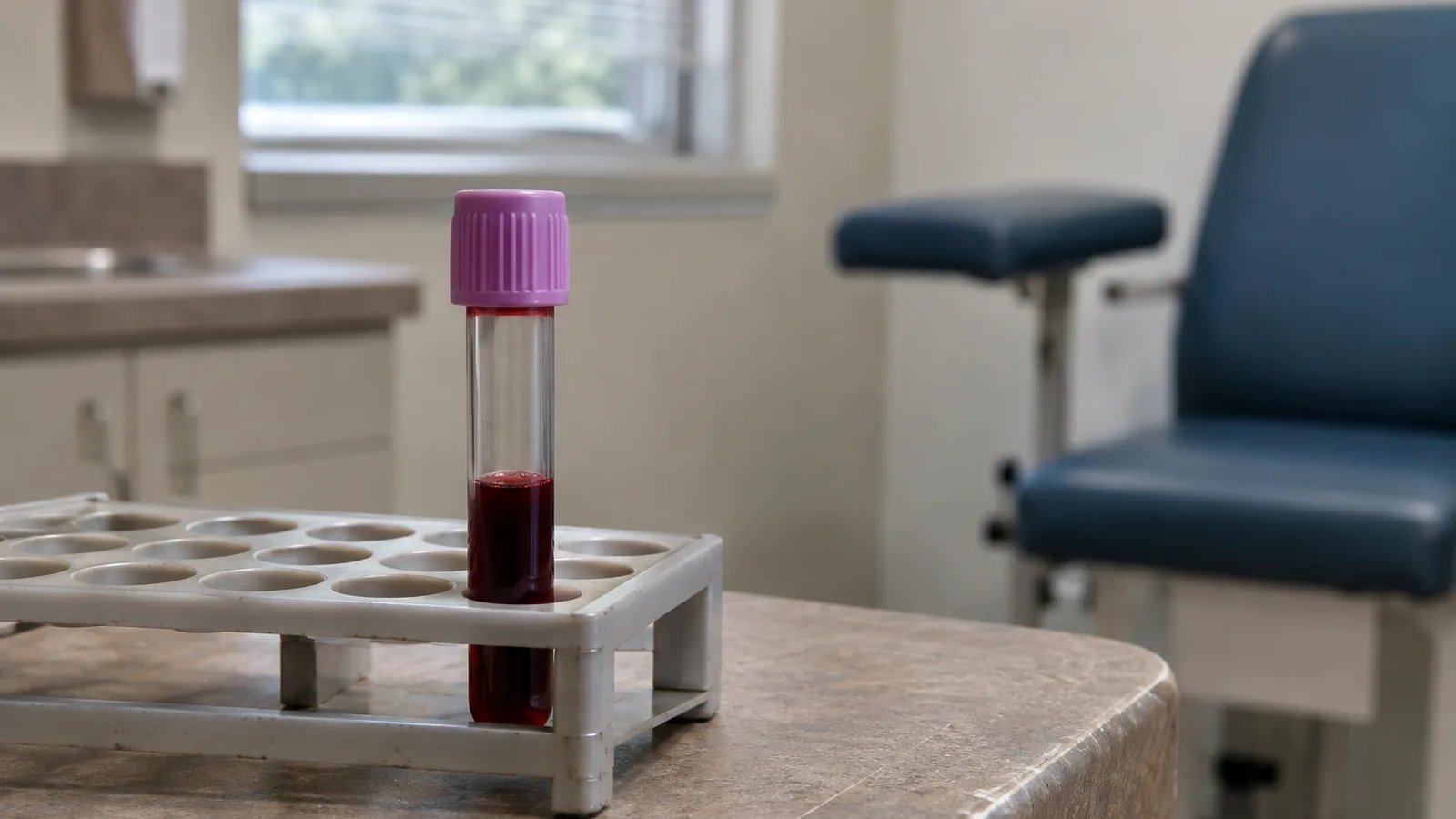
Eddie Baynes knew he was at higher risk. He is Black, which puts him in the group most likely to get prostate cancer and most likely to die of it, and still he didn’t start regular PSA testing until he was 52, when his fraternity put on a screening event. The blood work came back elevated, the workup found cancer, and he had his prostate removed. He is 56 now, and when STAT asked him this week about the American Cancer Society’s new screening guidelines, he said they “hit the nail on the head.”
On November 12 the society stopped leaving men like Baynes to find a fraternity event. Average-risk men between 50 and 69 should now get a PSA blood test every two years. Black men, men whose father or brother was diagnosed before 65 and men with several first-degree relatives who have had the disease should start yearly testing at 45, according to coverage of the guideline. From 70 to 74 the decision becomes one for a man and his doctor. After 75 routine screening isn’t recommended, though a very healthy man in his late seventies with a rising PSA may still choose it, and it stops after 80 or once life expectancy falls below ten years.
The guidance it replaces dated to 2010, when the society left testing for average-risk men to an informed conversation between doctor and patient. That was the gentle end of a broader retreat. In 2008 the U.S. Preventive Services Task Force recommended against screening men 75 and older, and in 2012 it gave PSA screening a grade D for men of every age. Its 2018 revision, still in force, softened that to a grade C for men 55 to 69, holding that “the decision to be screened for prostate cancer should be an individual one,” and it adds an instruction that rarely makes the headlines: “Clinicians should not screen men who do not express a preference for screening.” Men 70 and older still get a D. STAT notes that the task force’s recommendations decide which preventive services insurers must cover, and under the Affordable Care Act it is the A and B grades that carry the no-cost-sharing requirement. A C carries none.
Ten years was the wrong clock
The case against the PSA test was never frivolous. It’s a blunt instrument that flags men who have no cancer and finds slow-growing tumors that would never have harmed anyone, which under the old pathway meant biopsies, surgery and radiation for disease that didn’t need them. While the evidence for a mortality benefit was thin, caution passed for wisdom.
The evidence is no longer thin. In May, Cochrane, whose 2013 review found insufficient evidence that widespread PSA screening saved lives, published an updated review pooling six large randomized trials in Europe and North America, nearly 800,000 men in all, some followed for as long as 23 years. Cochrane’s own summary reports, with moderate certainty, that screening reduces prostate cancer deaths: about 2 fewer per 1,000 men, or one death prevented for roughly every 500 men invited to regular screening. It also meant about 5 fewer men per 1,000 diagnosed with cancer that had already metastasized.
The benefit is modest, and it has a price. Screening found roughly 30 percent more prostate cancers than no screening, and for every one or two lives saved, about 36 additional men were diagnosed. Britain’s CAP trial, which invited more than 400,000 men aged 50 to 69 to a single PSA test or none, shows the same shape in miniature. At ten years its investigators found no mortality benefit. At fifteen, nearly seven of every 1,000 invited men had died of prostate cancer against nearly eight of every 1,000 controls, and the University of Bristol team estimated that one in six cancers the single test found were overdiagnosed.
Prostate cancer kills slowly, so the benefit of catching it early shows up slowly. A trial read at ten years sees mostly the harms of screening, while one read at fifteen or twenty starts to count the deaths it prevented. Cochrane’s summary credits its reversal mainly to longer follow-up and says the underlying science didn’t change dramatically; the earlier reviews simply lacked the long-term data. The 2012 grade D was written on the shorter clock.
The registries kept counting
While the trials were still accruing years, the country ran an uncontrolled experiment of its own, and the society’s 2025 prostate cancer report records how it went. Incidence fell 6.4 percent a year from 2007 through 2014, the years that bracket the task force’s 2008 recommendation against screening older men and its 2012 recommendation against screening anyone. Then it turned, rising 3.0 percent a year from 2014 through 2021, with the steepest climb, 4.6 to 4.8 percent a year, in advanced-stage disease. Cancer that has spread beyond the prostate is rising by nearly 3 percent a year in men under 55 and 6 percent a year in men 55 and older. Five-year relative survival for that distant-stage disease is 38 percent; caught earlier, it approaches 100.
| Group | Value (percent per year) |
|---|---|
| Men under 55 (approximate) | 3 |
| Men 55 and older | 6 |
Deaths followed a similar bend. Prostate cancer mortality fell 3 to 4 percent a year through the 1990s and 2000s, when PSA testing was routine, and over the past decade the decline slowed to 0.6 percent a year. The society projects 333,830 new cases and 36,320 deaths in 2026, according to the Epoch Times, and William Dahut, its chief scientific officer, put the burden on the men Baynes belongs to: “Black men experience a 67% higher incidence and nearly double the mortality rate compared with White men.”
A registry trend isn’t a randomized trial, and the society’s report doesn’t pin the rise on the screening retreat. The sequence is still awkward to explain away. The authorities stopped recommending the test, recorded incidence dropped, and a few years later the cancers nobody was looking for began turning up at a later stage. Robert Smith, the society’s senior vice president for early cancer detection science, called the new guidelines “a critical step toward preventing diagnoses of advanced disease.”
Normal, according to the lab
The quieter half of the guideline goes after the harms that drove the retreat. The society now treats a PSA of 3.0 ng/mL or higher as elevated for men 45 to 69, while, as James Eastham, chief of urology at Memorial Sloan Kettering, pointed out to STAT, many lab reports call anything under 4.0 normal. The number “really should be under 3,” he said. A man who reads 3.5 can be handed a clean report that the cancer society would treat as a reason to look further.
Looking further no longer means going straight to a biopsy. The guideline asks for two elevated readings, then an MRI, another prostate cancer biomarker test, or both, and it still wants an MRI before any biopsy if a biomarker comes back abnormal. It doesn’t favor one biomarker over another, partly because the society’s own researchers haven’t settled which best predicts an aggressive tumor and plan to study it. “We just wanted to give a little bit of flexibility for folks who cannot easily obtain an MRI,” Dahut said. Eastham called the package “a balanced approach for early detection of prostate cancer.” The guideline also leans on active surveillance for slow-growing tumors, and Dahut was explicit that finding more early disease doesn’t mean men need to rush into treatment, or be treated at all. That takes much of the sting out of the overdiagnosis numbers that carried the 2012 debate.
The task force says an update is in progress. Until it publishes, the two bodies disagree on nearly everything a man in his fifties would want settled. The society says test every two years from 50, and every year from 45 for Black men and those with a family history. The task force says the decision is an individual one starting at 55, tells clinicians not to screen a man who expresses no preference, and recommends against screening at 70. The trials kept running long enough to show the deaths that screening prevents, and the cancer society moved. The task force did not. Eddie Baynes, who knew his risk, found his cancer at a fraternity event.
Sources
- STAT: American Cancer Society revises guidelines, urges routine PSA screening for prostate cancer (Nov. 12, 2026)
- Cochrane Database of Systematic Reviews: Prostate-specific antigen (PSA) test for prostate cancer screening (2026 update)
- Cochrane US: Catching it early: why the latest Cochrane review shifts the debate on prostate cancer screening
- American Cancer Society: 2025 Prostate Cancer Statistics Report
- University of Bristol: CAP trial finds PSA screening has a small impact on prostate cancer deaths but leads to overdiagnosis (2024)
- U.S. Preventive Services Task Force: Prostate Cancer: Screening (2018; update in progress)
- The Epoch Times: American Cancer Society Updates Prostate Cancer Screening Guidelines (Nov. 12, 2026)