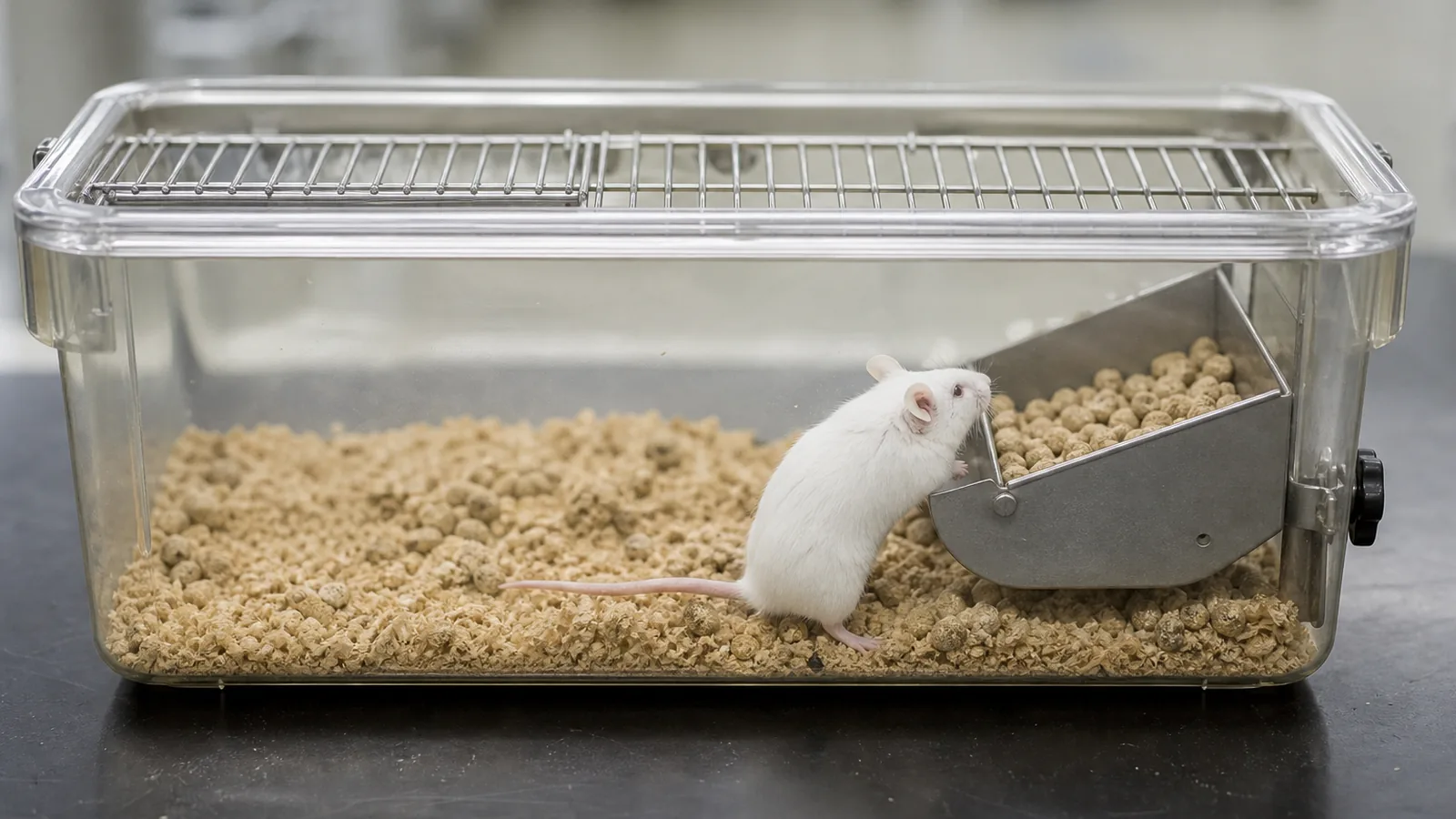
Here is what I could not let go of when I read this study: the mice that lost the most fat were not the ones eating the least. They were eating more than the mice on standard chow, matching the calorie load of the animals stuffed on a Western junk diet, and they still got leaner. That breaks the folk version of diet math every one of us carries around, the one where the scale is just a subtraction problem. So my first reaction was a raised eyebrow and a very specific question: what are these mice doing with the food that the rest of us are not?
The answer, from a team at USC’s Leonard Davis School of Gerontology publishing in Cell Metabolism, comes down to a single amino acid dialed to a very narrow setting. Not cut out. Not piled on. Turned down to low but sufficient, and held there.
The diet has an ugly acronym, LDMM, for low-protein diet with methionine modulation. In plain terms it is a mostly plant-and-fish plate, low in protein overall, with a careful pinch of methionine added back in. First author Maura Fanti and lead investigator Valter Longo ran four diets against each other in 20-month-old mice, the mouse equivalent of solidly middle-aged: standard chow, a high-fat high-sugar Western diet, a ketogenic low-carb diet, and the LDMM. The methionine-tuned group came out ahead on the things that actually matter as a body ages. Less body fat. Preserved lean muscle. Fewer signs of frailty, and a longer stretch of life spent in good health. They got there while eating freely, taking in as many calories as any other group and losing fat anyway.
Now, why methionine of all things? This is where I had to slow down, because the mechanism is genuinely strange. Methionine is an essential amino acid, meaning your body cannot make it and has to pull it from food. It is concentrated in animal protein, in meat, eggs, and dairy. Your liver treats it as a message, not just a brick. When methionine runs low, the liver reads that as news about the food supply and starts rewiring the body’s fuel economy. In these mice, that rewiring turned up three hormones at once: growth hormone, FGF21, and GLP-1.
Sit with those last two. FGF21 is a fasting hormone, the molecule your liver pours out when it thinks lean times are coming, and one of its jobs is to crank up how much energy you burn at rest. And GLP-1, if that acronym looks familiar, is the same signal Ozempic and Wegovy imitate from the outside with a weekly shot. Those drugs are GLP-1 receptor agonists, synthetic stand-ins for the hormone your gut makes on its own. Here the low-methionine plate coaxed the mouse’s own gut and pancreas into making more of the real thing. And that reframes the whole paradox: the methionine in a meal is working less like fuel and more like a note passed to the liver. The animal eats a full plate, its body reads the amino-acid signature of that plate as scarcity, and it spends more fuel and stores less fat in response. Eating more and getting leaner stops being a contradiction once you see the body is not tallying calories. It is reading the messages inside the food, and methionine is one of the loudest.
That is the part that delighted me, so let me be equally honest about the part that should make you cautious. This is mice. Twenty-month-old mice on a controlled research diet, not people at a dinner table. The regulation of these exact pathways differs between species, the authors say so themselves, and no human trial of the LDMM has been run. When a study makes you want to change your grocery list, that is exactly the moment to check who is holding the pen.
Because one of the names on the paper sells longevity diets. Fanti ran the experiments, but Longo is the senior author, and Longo is the founder of L-Nutra, the company behind ProLon, the roughly $300 five-day fasting-mimicking kit. He holds an equity stake in it, and USC licensed related intellectual property and stands to collect royalties. None of that is hidden. It is disclosed in the paper, and disclosure is how this is supposed to work. But it changes how I read a press release that arrives pre-loaded with a marketable product name and an acronym ready for a label. A researcher whose company profits from telling you to eat less animal protein has a standing incentive to publish that eating less animal protein is good for you. The finding can hold up and the messenger can be conflicted at the same time. Both things are true here, and you are allowed to hold them together.
What keeps this from being just another mouse-and-a-supplement-company story is the human data sitting underneath it. The team looked at diet and health records for more than 200,000 people and found that those eating the most animal protein, the heaviest methionine load, carried more obesity and about 2 times the rate of diabetes as the people eating little to none. And here is the detail that made me sit up: that gap held even though the high-animal-protein eaters were taking in fewer calories. It is observational, it cannot prove the amino acid is the culprit, and heavy meat-eaters differ from near-vegetarians in a hundred other ways. But it points the same direction as the mice, and two arrows aimed at one target from different methods say more than either could alone.
There is a quiet contrarian streak in all of this that I appreciate. The loud metabolic advice of the last decade has been protein, protein, protein: at every meal, for muscle, for satiety. This work does not say protein is the enemy. It says the composition of that protein, specifically its methionine, may matter more than the gram count on the label, and that a low-but-adequate setting does something a high-protein plate cannot. That is a genuine challenge to the high-protein orthodoxy, and it deserves a human trial, not a product launch.
So what would I actually do with this? Not order a kit. The intervention with evidence behind it is not a branded five-day box, it is the boring, cheap, plant-forward plate with fish and modest protein that half the longevity literature keeps circling back to. I already lean that way, and one mouse result is not going to make me start dosing individual amino acids off a spreadsheet. I would eat the Mediterranean plate, keep the animal protein modest rather than maximal, and wait for the human trial before I trust any number printed on a supplement label. When a conflicted longevity-diet entrepreneur is a lead author, I read the mechanism closely and I keep my wallet shut.
Sources
- Cell Metabolism – Fanti, Longo et al., methionine-modulated longevity diet increases growth hormone, GLP-1, and FGF21, reduces frailty, and improves healthspan in aged mice (2026)
- EurekAlert! (USC) – Low-protein, methionine-supplemented ‘longevity diet’ linked to lower fat and frailty; four-arm design, 20-month-old mice, L-Nutra equity disclosure (2026)
- Medical Xpress – Mediterranean-inspired diet with added methionine raises growth hormone, GLP-1, and FGF21 in mice (2026)
- News-Medical – USC study links modified Mediterranean diet to longer healthspan, including the 200,000-person analysis and twofold diabetes figure (2026)
- ScienceDaily – “Scientists found a longevity diet that helped mice eat more and lose fat” (2026)
- STAT – “He wants to sell you a $300 ‘fasting diet’ to prolong your life” (2017)
- Wikipedia – Valter Longo, founder of and equity holder in L-Nutra