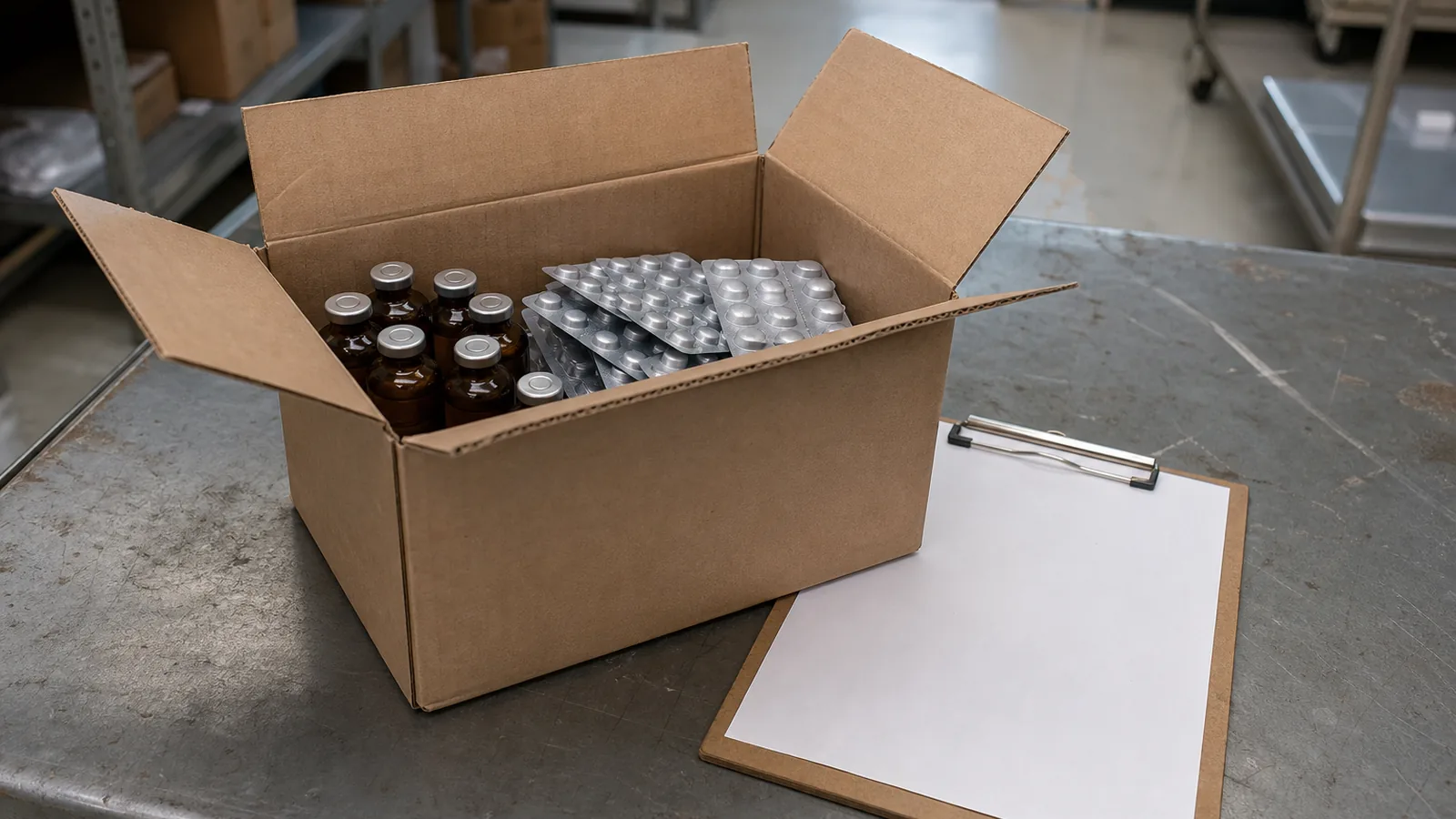
When Michael Davis, the acting director of the FDA’s drug center, sat down to explain the agency’s new proposed rule on Friday, he reached for a sentence that plays as reassurance and reads, on a second pass, like a confession. “When an active ingredient in a medicine reaches an American patient,” he said, “the FDA should be able to trace exactly where it came from.”
Should be able to. The tense is doing the work.
The rule Davis was selling went out on July 10 under a headline built to be ignored: FDA Proposes Rule to Modernize Drug Manufacturing Registration. It has two halves, and the agency led with the half designed to please the people it regulates. Under the proposal, drug makers who run what the FDA calls a “hub-and-spoke” operation, a single quality-control center overseeing identical production units scattered across different sites, could register the whole network as one establishment instead of filing separately for each location. Units could be added, moved, or shut with a streamlined update. Davis’s pitch for this part was frank about who it serves: the changes, he said, would make it easier for “innovative manufacturers to operate efficiently.”
That is the modernization. A convenience for industry, and not the news.
The news is the second half, the one that arrives further down the release with far less fanfare. For years, the rules governing who has to register with the FDA contained a gap you could drive a container ship through. A foreign facility that made an active pharmaceutical ingredient, the molecule that actually does the work in your pill, did not have to register with the American regulator if that ingredient was shipped to another foreign site for further processing before it ever reached the United States. One hop through a second foreign plant, and the original factory never had to appear on the FDA’s registration rolls at all. The agency knew the finished product. It did not always know the source.
Put plainly, that means a contaminated or substandard batch of active ingredient could travel from an unregistered plant, through an intermediary, and into an American pharmacy before the FDA had a name to inspect or a record to pull. The regulator would be working the problem backward, from the pill, hoping the chain held.
The proposed rule would close that. Foreign establishments making drugs or active ingredients bound for the U.S. supply, even indirectly, would have to register and report what they produce, giving the FDA, in the agency’s phrasing, a better ability to detect and respond to problems upstream. Strip out the bureaucratic softening and the admission is stark: until now, the FDA could not reliably see the beginning of the chain that ends in the American drug supply.
The blind spot is enormous. As of 2019, only 28 percent of the facilities making active ingredients for the U.S. market sat on American soil, the FDA told Congress; the rest were abroad, much of it in China and India, and the deeper you go upstream, the darker it gets. A Brookings analysis of U.S. exposure to China estimated Chinese-made active ingredient in perhaps a quarter of the drug volume sold in this country, then added the sentence that ought to end every complacent conversation about drug safety: “visibility into upstream supply chains is extremely limited, making any existing numbers suspect.” The same analysis found that of 417 Chinese API facilities registered in the FDA’s own database, 53 percent had neither paid the generic-drug user fees nor generated any compliance record suggesting they actually make drugs for the American market, which tells you how little a registration entry, by itself, actually certifies.
This is the part the “modernization” frame is built to obscure. A registration tells you a factory exists. It does not tell you what comes out of it.
There is one more detail the press release does not dwell on, and it reframes the whole exercise. The FDA is not doing this on its own initiative. The authority for the foreign-registration change traces to Section 2511 of the PREVENT Pandemics Act, the post-COVID law in which Congress amended the Federal Food, Drug, and Cosmetic Act to force exactly this kind of visibility. The legislature had to write the requirement into statute before the agency moved to close a hole its own leadership had been describing publicly since at least 2019, the year it told Congress that fewer than a third of the plants making American drugs’ active ingredients were domestic. The gap was not a secret. It was a known feature of the system for the better part of a decade, and it took an act of Congress and a pandemic to produce a proposed rule.
None of which closes the hole today. A proposal enters a public comment window, absorbs the industry objections that will surely arrive about the cost of registering every upstream supplier, and only then, if it survives, becomes binding. The gap stays open while the docket fills. The active ingredient keeps arriving in the meantime, by whatever route it takes, from whatever facility the FDA cannot yet name.
Davis, to his credit, described the goal in plain English, which is more than the headline did. The agency should be able to trace where a medicine’s active ingredient came from. In 2026, after a global pandemic exposed exactly how thin the country’s grip on its own drug supply had become, the FDA is proposing to finally give itself the paperwork to try.
Sources
- FDA: Proposes Rule to Modernize Drug Manufacturing Registration (July 10, 2026)
- RAPS: FDA proposes rule to ease registration for distributed manufacturers, require foreign API sites to register (PREVENT Pandemics Act §2511)
- Brookings: U.S. drug supply chain exposure to China
- FDA congressional testimony: Safeguarding Pharmaceutical Supply Chains in a Global Economy (Oct. 30, 2019)